Source Stainless Steel Twist Ballpoint Pen for Office, School, Gifts
Compare 30 stainless steel twist ballpoint pen options from verified suppliers. Buyers can evaluate features like point diameter, hardness, and customization for promotional, office, and school use. These metal pens offer twist or click styles with single or multiple color options and logo printing capabilities for various business needs.
Key considerations
Products List




Comprehensive Sourcing Guide
Stainless Steel Twist Ballpoint Pen Sourcing Guide
Product Scope and Observed Listing Signals
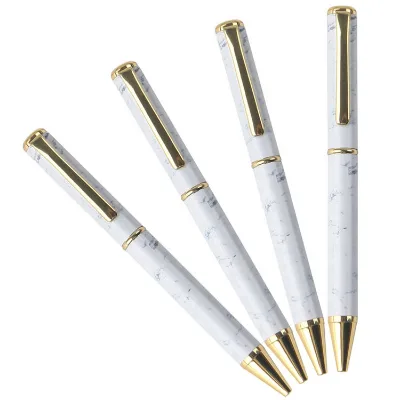
The market for stainless steel twist ballpoint pens presents a diverse array of options, though current listing data reveals significant variation in material composition and mechanism design. While the core keyword specifies stainless steel, observed product attributes indicate a mix of metal types, including cooper and brass barrels, alongside general metal constructions. Buyers must carefully distinguish between true stainless steel offerings and alternative metal finishes to ensure alignment with brand quality standards. The twist mechanism is a prominent feature, yet some listings also highlight click-style operations, requiring precise specification verification to avoid procurement errors.
Color customization is a critical differentiator in this category, with observed data showing options ranging from single-color and double-color configurations to eight-color variety packs. This flexibility supports extensive branding opportunities for promotional campaigns and corporate gifting. However, the presence of both oil-based and water-based ink types adds another layer of complexity. Procurement teams must verify the ink chemistry to ensure compatibility with the pen’s internal mechanism and the intended writing surface, as these factors directly impact user experience and product longevity in diverse environments.
Technical Specifications to Verify
Point diameter is a fundamental technical parameter that influences writing precision and ink flow consistency. Observed specifications include 0.7mm and 1.0mm tip sizes, each serving distinct user preferences and use cases. The 0.7mm option typically offers finer lines suitable for detailed note-taking, while the 1.0mm variant provides bolder strokes for general writing. Buyers should confirm the exact tip size required for their target audience, as mismatched specifications can lead to customer dissatisfaction. Additionally, the hardness of the pen body, described as medium soft or partial hard, affects the tactile feel and durability during daily use.
Physical dimensions and packaging standards are equally important for logistics and presentation. Standard lengths observed include 13.8cm, 14cm, and 15.3cm, with corresponding diameters that influence grip comfort. Packaging configurations vary widely, from individual OPP bags to bulk master cartons containing 500 pieces. These variations impact shipping costs and storage requirements. Buyers must align packaging choices with their distribution strategy, ensuring that the inner and outer packaging protects the pens while facilitating efficient handling. Model numbers such as 135C1 and XL-13122 serve as unique identifiers for quality control and reorder accuracy.
Compliance and Safety Documentation
Safety compliance is paramount when sourcing writing instruments, particularly those intended for school or office environments. Buyers must verify that all materials, including the metal barrel and ink components, meet relevant international safety standards for non-toxicity. Although specific certification statuses are not universally listed, reputable suppliers should provide documentation confirming the absence of harmful substances like lead or cadmium in the metal alloys. This is especially critical for stainless steel products, where alloy composition can vary significantly between manufacturers.
Ink safety is another key area requiring attention. Whether the pen uses oil-based or water-based ink, the formulation must comply with regional regulations regarding chemical content and labeling. Buyers should request Material Safety Data Sheets (MSDS) for the ink to ensure it meets environmental and health standards. Additionally, packaging materials should be evaluated for recyclability and compliance with waste reduction directives. Ensuring that all components, from the twist mechanism to the cap, are free from sharp edges or small detachable parts is essential for preventing injury and meeting consumer product safety requirements.
Cost Drivers and Commercial Terms
The cost of stainless steel twist ballpoint pens is influenced by several factors, including material quality, customization complexity, and order volume. Observed price ranges vary significantly, reflecting differences in manufacturing processes and branding requirements. Customization options, such as logo printing and multi-color designs, add to the unit cost but enhance brand visibility. Buyers should evaluate the total cost of ownership, considering not just the unit price but also the impact of customization on production lead times and minimum order quantities.
Minimum order quantities (MOQs) observed in the market range from small batches of two pieces to large volumes of 50,000 pieces. These variations allow for flexibility in procurement strategies, catering to both trial orders and mass production needs. However, higher volumes often result in lower unit costs due to economies of scale. Buyers must balance their inventory requirements with cash flow constraints, selecting MOQs that align with their sales forecasts. Additionally, payment terms and shipping costs should be negotiated to optimize overall procurement expenses, ensuring that the final landed cost remains competitive.
Supplier Qualification and Quality Control
Supplier qualification is a critical step in ensuring the reliability and consistency of stainless steel twist ballpoint pen orders. Buyers should assess suppliers based on their manufacturing capabilities, quality management systems, and track record in producing metal writing instruments. Verification of production facilities, including equipment for metal forming and ink filling, is essential to confirm the supplier’s ability to meet technical specifications. Suppliers with experience in exporting to diverse markets are often better equipped to handle complex customization requests and adhere to international standards.
Quality control measures must be rigorously implemented throughout the production process. Buyers should establish clear acceptance criteria for pen functionality, including the smoothness of the twist mechanism and the consistency of ink flow. Regular inspections, such as pre-shipment audits, can help identify and rectify defects before products are dispatched. Additionally, suppliers should provide samples for evaluation to ensure that the final product matches the agreed-upon specifications. Building a strong relationship with the supplier through transparent communication and mutual trust can lead to improved quality and service over time.
Long-Term Procurement Checks
Long-term procurement success depends on continuous monitoring of supplier performance and market trends. Buyers should regularly review supplier metrics, including on-time delivery rates, defect rates, and responsiveness to issues. Establishing key performance indicators (KPIs) and conducting periodic performance reviews can help identify areas for improvement and ensure that suppliers remain aligned with procurement goals. Additionally, staying informed about industry developments, such as new materials or manufacturing technologies, can provide opportunities for cost savings and product innovation.
Sustainability and ethical sourcing are increasingly important considerations for long-term procurement strategies. Buyers should evaluate suppliers’ environmental practices, including waste management and energy efficiency, to ensure alignment with corporate sustainability goals. Ethical labor practices and fair trade certifications should also be verified to mitigate reputational risks. By integrating these considerations into their procurement processes, buyers can build a resilient and responsible supply chain that supports both business objectives and broader societal values.
FAQs
What are the available point diameters for these pens?
The pens are available in 0.7mm and 1.0mm point diameters. These options allow buyers to select the appropriate writing width for specific office or school applications. The 0.7mm tip is ideal for detailed writing, while the 1.0mm tip provides a bolder line for general use.
Can these pens be customized with a logo?
Yes, logo printing is available for these promotional pens. Buyers can add their branding to the metal barrel for business gifts or marketing campaigns. Customization options include single, double, or eight-color printing, ensuring the final product aligns with specific corporate identity requirements and visual preferences.
What is the standard packaging configuration for bulk orders?
Standard packaging typically includes one piece per OPP bag, fifty pieces per inner box, and five hundred pieces per master carton. This configuration ensures efficient protection during shipping and easy inventory management. Some models may use white boxes or customized packaging solutions based on specific buyer requirements.
Which writing styles are supported by these ballpoint pens?
These pens support both oil-based and water-based ballpoint writing styles. The oil-based variety offers a smooth, medium-soft writing feel, while the water-based option provides a different ink flow characteristic. This variety allows buyers to choose the writing experience that best suits their target audience's preferences.
Are these pens designed for single use or repeated use?
These pens are non-disposable and designed for repeated use. Constructed with metal barrels, they offer durability for long-term office or school applications. The sturdy build ensures they can withstand daily handling, making them suitable for business gifts or promotional items that need to last beyond a single event.
What are the common opening styles for these pens?
The pens feature both twist and click opening styles. The twist mechanism provides a classic, secure closure, while the click style offers quick, one-handed operation. These distinct mechanisms cater to different user preferences, allowing buyers to select the style that best fits their ergonomic and functional requirements.